
Icy sidewalks and driveways may be common in winter, but they can be deadly if you fall. Here’s how to stay safe.
DOYLE RICE USA TODAY18 hours ago
Show Caption
Is cold weather more dangerous than hot?
How many ice-related deaths occur annually in the US?
Is cold weather more dangerous than hot?
How to avoid hypothermia this winter?
A potentially fatal winter danger is hiding in plain sight and can strike nearly any unsuspecting victim.
Across the U.S. each year, an estimated 1 million people are injured from slipping on ice and snow, leading to serious issues like broken bones and head injuries, with around 17,000 of these falls proving fatal, according to statistics from the Centers for Disease Control and Prevention.
In 2024 winter, Jolene Waldref, 49, of South Milwaukee, was leaving her job as a receptionist at a home health care agency on Jan. 15 when she slipped and fell on the ice, hitting her head on a fence on a nearby property, according to records from the Milwaukee County Medical Examiner’s office. She died of hypothermia in the freezing weather shortly thereafter.
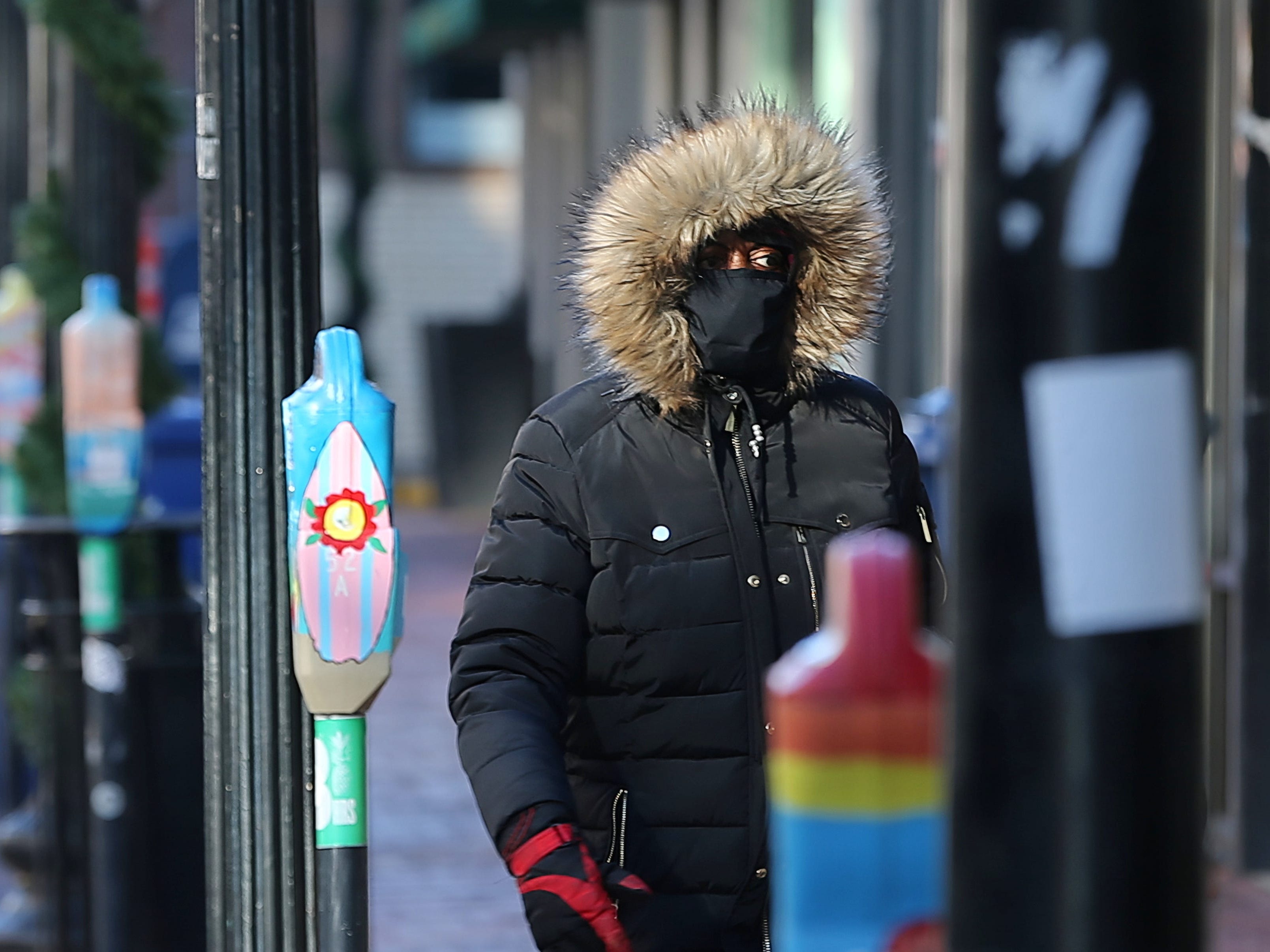
View |6 PhotosSee effects of polar vortex as winter temperatures plunge across US
A portion of the vortex, a massive area of low pressure and cold air, sometimes breaks off from the North Pole, sending blasts of freezing weather south.
Such tragedies can happen in the South, too: Carl Mathieu, a Louisiana man, died in February 2021 after he slipped on ice and hit his head on the ground, the Louisiana Department of Health said.
With winter weather already in place across much of the nation, here are some tips for staying safe while walking on icy surfaces over the coming months.
Assume the worst
In cold temperatures, approach surfaces with caution and assume that all wet, dark areas on pavements are slippery and icy, the Injured Workers’ Insurance Fund (IWIF) recommends.
“During bad weather, avoid boots or shoes with smooth soles and heels,” the IWIF said in an online tip sheet. “Instead, wear shoes or boots that provide traction on snow and ice; boots made of non-slip rubber or neoprene with grooved soles are best.”
In addition, although salting sidewalks can help, it’s not a cure-all for melting ice, as it only works at temperatures above 15 degrees, according to the California Office of Emergency Services. Salt can also cause potential damage to concrete and plants, sometimes making alternatives like sand or calcium chloride (for concrete) better choices.
More: Video: The safest way to walk on ice
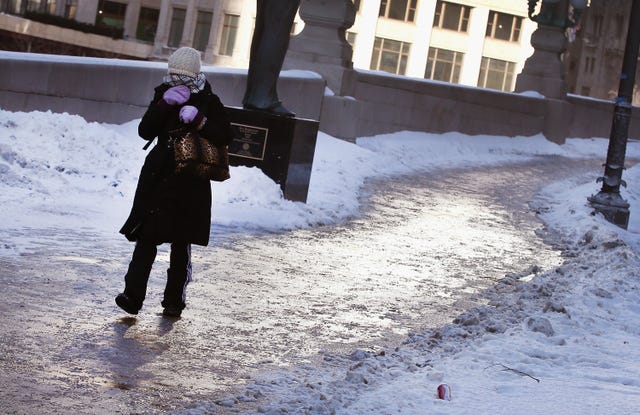
A pedestrian navigates an ice-covered sidewalk along the Chicago River as temperatures drop below zero January 27, 2014, in Chicago, Illinois.
SCOTT OLSON, GETTY IMAGES
Safety tips for walking on ice
The Injured Workers Insurance Fund recommends several safety tips:
- Use special care when entering and exiting vehicles; use the vehicle for support.
- Point your feet out slightly like a penguin. Spreading your feet out slightly while walking on ice increases your center of gravity.
- Bend slightly and walk flat-footed with your center of gravity directly over the feet as much as possible.
- Extend your arms out to your sides to maintain balance.
- Keep your hands out of your pockets. Keeping your hands in your pockets while walking decreases your center of gravity and balance. You can also help break your fall with your hands free if you do start to slip.
- Watch where you are stepping and … go … slowly (very … slowly).
- Take short steps or shuffle for stability.
- Wear a heavy, bulky coat that will cushion you if you fall.
What if you fall? There are a few things you can do mid-fall (if you can) that may reduce the chance of serious injury.
- Try to avoid landing on your knees, wrists, or spine. Try to fall on a fleshy part of your body, such as your side.
- Try to relax your muscles if you feel yourself falling. You’ll injure yourself less if you are relaxed.













 Parazonn