
December 18, 2025
From glowing neurons to newborn memories, here are the most fascinating brain discoveries of 2025
By Allison Parshall edited by Andrea Thompson
Neuroscience
The human brain has 86 billion neurons connected by roughly 100 trillion synapses, making it one of the most complex objects in the known universe. Each year neuroscientists make fascinating, important and downright strange discoveries about how this resilient structure works, and 2025 didn’t disappoint. Here are 10 of the most fascinating brain discoveries of this year for your own brain to noodle on.
The Eras Tour
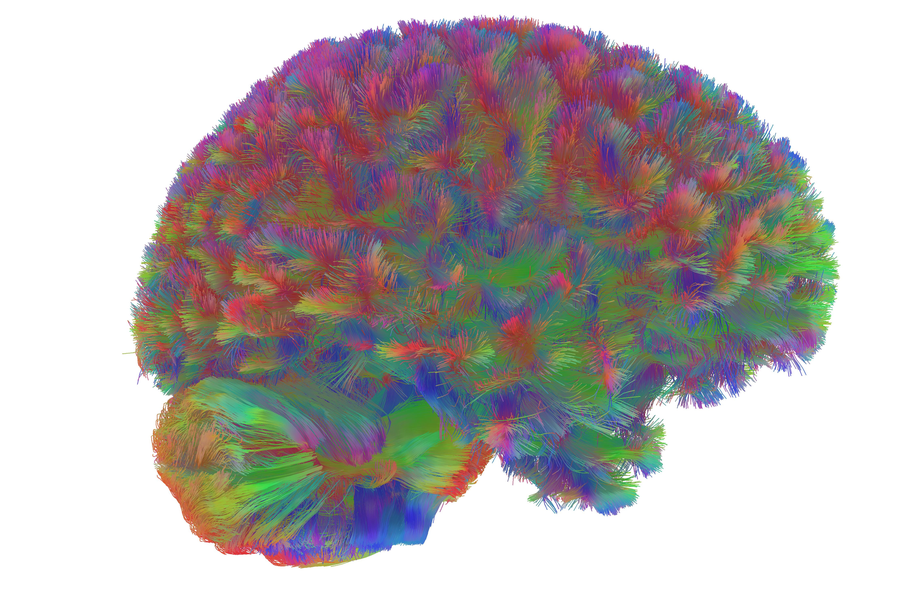
Brain scans of thousands of people revealed that the human brain has five distinct eras, with turning points in the way it is organized occurring at age nine, 32, 66 and 83. Across each of these stages—for example, the “adolescent” period between age nine and 32—people’s brains tend to experience the same types of changes.
Missing Memories
You don’t remember being a newborn or even a toddler. Adults’ earliest memories tend to start around preschool and no earlier. But recent research suggests that your brain was making memories back then; you just don’t have access to them now. A study of the infant hippocampus, a deep-brain structure crucial for memory formation, found that it can store memories once babies are around one year old—though it’s not clear why we can’t recall them once we grow up.
Untangling Alzheimer’s
Researchers also discovered another oddity of newborn babies’ brain: they have very high levels of a protein that, in adults, indicates Alzheimer’s disease. Tau proteins help to stabilize brain cells’ structure, but they can undergo chemical changes that lead them to become tangled up, a process linked to Alzheimer’s. The fact that healthy newborn brains have high levels of these proteins, which later decrease, suggests that these detrimental changes in adults could be avoided or reversed.
A Neuron Is Born
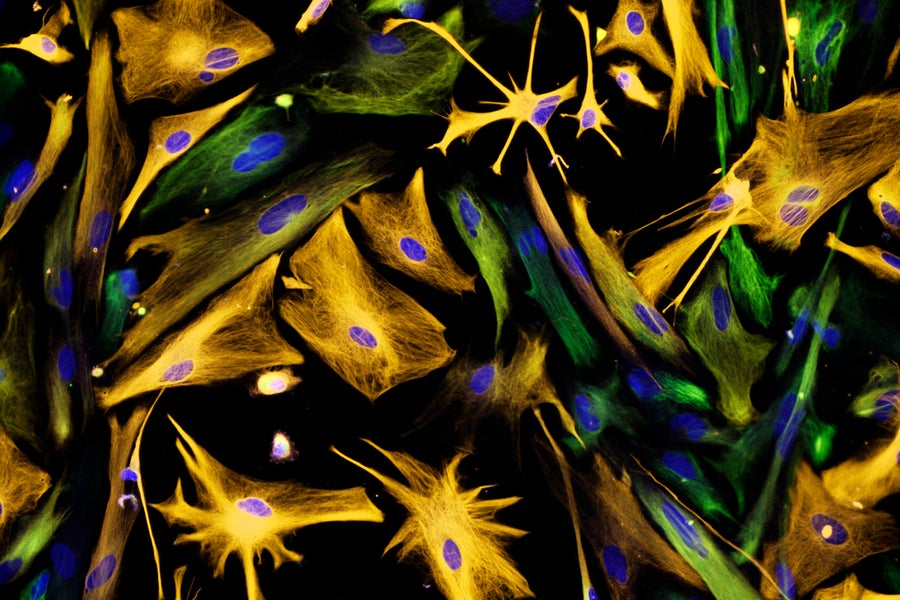
Neuroscientists long believed that you’re born with all of the neurons you’ll ever have. But evidence has slowly accumulated to suggest that adults can form new neurons, a process called neurogenesis. Until now, the evidence was mostly circumstantial (and controversial). But this year researchers discovered newly formed neurons and the precursor cells that birthed them in the brains of adults, some as old as age 78. These findings “should finally put this all to rest,” said a neurobiologist who wasn’t involved in the research.
Reality Check
When you imagine an apple, your brain activity is not that different from when you actually see an apple. So how does your brain know the difference? Scientists discovered a “reality signal” generated by a region of the brain called the fusiform gyrus, which is then evaluated by another region to determine whether something is real or imagined. The researchers think that dysfunction of this system could lead to hallucinations, in which people mistake something generated by the brain for something real.
Recommended Stories
- Scientists Identify Five Distinct Eras of Human Brain AgingClaire Cameron
- How Influential People Map Their Social WorldOriel FeldmanHall
- Not Everyone with Schizophrenia Hears Voices. Here’s WhyHannah Seo
- AI Decodes Visual Brain Activity—And Writes Captions for ItMax Kozlov & Nature magazine
Huntington’s Hopes
Early results from a clinical trial have shown that a drug called AMT-130 slows the progression of Huntington’s disease. If approved by regulators, it will be the first treatment for this rare, genetic neurological disorder that actually treats the disease itself, not just the symptoms. The treatment works by delivering the drug directly to the deep brain through an eight- to 10-hour surgery.
Primate Enlightenment
The human brain is special. Yet much of what scientists thought made us different from other animals has been steadily eroded by evidence. This year scientists learned more about the cognitive abilities of our closest primate relatives. Chimpanzees, for example, can weigh evidence to update beliefs when they are proven wrong, a type of rational thinking. And bonobos can tell when a human doesn’t know something—an ability called theory of mind.
Beyond the Rainbow
Our brains construct colors based on the activation of cells in our retinas that pick up blue, green and red light. Because of a quirk of biology, there’s no light on Earth that can activate only green-light-detecting cells. But researchers were able to do just that by lasering the eyes of five participants to create an impossible new color the scientists called olo: a wildly saturated blue-green that exists beyond our normal visual range.
Glowing Brain
Did you know that your brain glows? Living tissues emit light called biophotons as a by-product of consuming energy—and the brain consumes a whole lot of energy. In a recent experiment, scientists detected biophotons emitted by the human brain from outside the skull for the first time. The emission changed as people did different mental tasks, but whether these photons play a role in cognition at all remains to be seen.
The Big Question
The greatest mystery about the brain is how it creates consciousness. How does the activity of tens of billions of neurons create your experience of the world? Scientists have many theories of consciousness, and two recently went head-to-head in a scientific face-off. The results were extremely mixed, challenging some of the central tenets of both theories and highlighting just how much mystery remains in the quest to understand our mind.













 Parazonn