
The Blue Oval is also working on new hands-free driver assists.
JONATHAN M. GITLIN – 8 JAN. 2026 01:00 | 101
Credit: Getty Images
TEXT SETTINGS
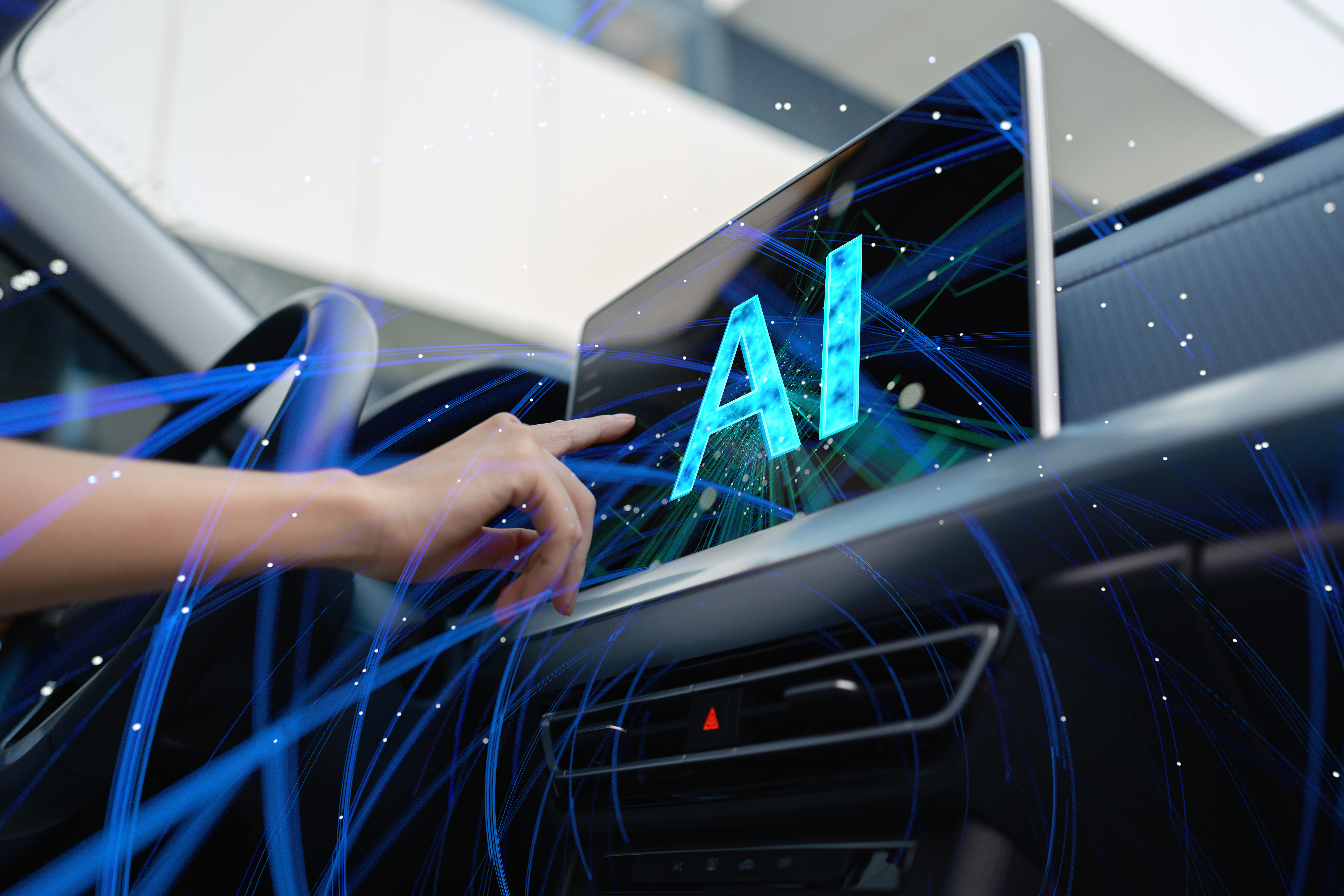
The annual Consumer Electronics Show is currently raging in Las Vegas, and as has become traditional over the past decade, automakers and their suppliers now use the conference to announce their technology plans. Tonight it was Ford’s turn, and it is very on-trend for 2026. If you guessed that means AI is coming to the Ford in-car experience, congratulations, you guessed right.
Even though the company owes everything to mass-producing identical vehicles, it says that it wants AI to personalize your car to you. “Our vision for the customer is simple, but not elementary: a seamless layer of intelligence that travels with you between your phone and your vehicle,” said Doug Field, Ford’s chief EV, design, and digital officer.
“Not generic intelligence—many people can do that better than we can. What customers need is intelligence that understands where you are, what you’re doing, and what your vehicle is capable of, and then makes the next decision simpler,” Field wrote in a blog post Ford shared ahead of time with Ars.
As an example, Field suggests you could take a photo of something you want to load onto your truck, upload it to the AI, and find out whether it will fit in the bed.
How The Callisto Protocol’s Gameplay Was Perfected Months Before Release
At first, Ford’s AI assistant will just show up in the Ford and Lincoln smartphone apps. Expect that rollout to happen starting early this year. From 2027, the AI assistant will become a native experience as new or refreshed models are able to include it, possibly starting with the cheap electric truck that the automaker tells us is due next year, but also gas models like the Expedition and Navigator.
Also expect those new or refreshed models to become software-defined vehicles, where dozens of discrete electronic control units have been replaced by a handful of powerful multitasking computers. This is one of the latest trends in automotive design, and at CES this year, Ford is showing off what it calls its “High Performance Compute Center”—perhaps high-performance computer sounded too pedestrian for something with four wheels.
The new computer was designed in-house and is in charge of infotainment, the advanced driver assistance systems, audio, and networking. Ford says the new computer is much cheaper than previous solutions, while taking up half the volume, even as it offers much better performance. “Our upcoming Universal Electric Vehicle (UEV) architecture incorporates a fivefold increase for the in-house module design, giving us 5X more control over critical semiconductors,” said Paul Costa, executive director of electronics platforms at Ford.
Moving to a software-defined vehicle architecture, with much more powerful processing for things like perception, means Ford can get a little more ambitious with its partially automated driver assists. According to Field, next year will see the debut of a new generation of its BlueCruise assist that has “significantly more capability at a 30 percent lower cost.” And in 2028, Ford plans to start offering a so-called “level 3” assist, where the driver can give up situational awareness completely under certain circumstances, like heavy highway traffic.
JONATHAN M. GITLINAUTOMOTIVE EDITOR
Jonathan is the Automotive Editor at Ars Technica. He has a BSc and PhD in Pharmacology. In 2014 he decided to indulge his lifelong passion for the car by leaving the National Human Genome Research Institute and launching Ars Technica’s automotive coverage. He lives in Washington, DC.












 Parazonn