
Last UpdateApril 7, 2026, 12:00 AM EDT
Astronauts on the Artemis II mission are nearing the moon on flight day six, with the crew set to surpass Apollo 13’s distance record and become the most distant humans in history. The flyby promises new views of the far side of the moon never seen before by human eyes.
Covered by: Stephen Sorace, Bonny Chu and Landon Mion
WHAT TO KNOW
- Artemis II is humanity’s first journey to the moon since 1972. The mission will be a non-stop, six-hour flyby following the same figure-eight path that Apollo 13 previously took.
- The Artemis II crew consists of three Americans, Commander Reid Wiseman, Mission Specialist Christina Koch and Pilot Victor Glover, and one Canadian, Mission Specialist Jeremy Hansen.
- The astronauts will fly around the far side of the moon later Monday, surpassing Apollo 13’s 1972 distance record and becoming the most distant humans in history.
- After the lunar flyby, it will take four days for the astronauts to return home. The capsule will aim for a splashdown in the Pacific Ocean near San Diego on April 10, nine days after its Florida launch.
21PostsNewestOldest
Coverage for this event has ended.
8 hours ago
PINNED
Artemis II astronauts report Moon appearing very brown with unusual green hues
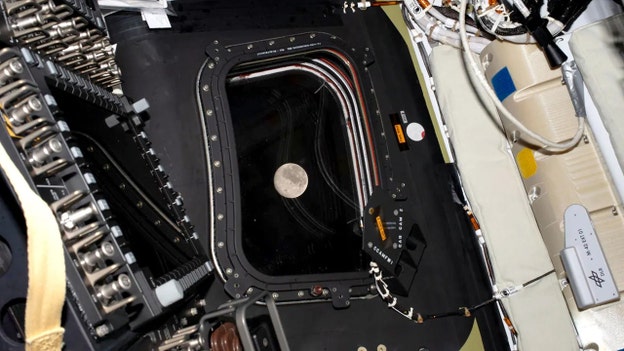
Before going to sleep on flight day 5, the Artemis II crew snapped one more photo of the Moon. (NASA)
During their lunar observations, the Artemis II crew spotted unexpected colors on the Moon’s surface.
Much of the terrain appeared brown, while distinct greenish tones showed up in isolated areas.
“Something I just heard from the window team is the more I look at the moon and the browner and browner it looks, I thought that was an interesting observation,” Mission Specialist Christina Koch said during a NASA transmission.
Canadian astronaut Jeremy Hansen noted the greenish hues near the Aristarchus Plateau, a large, relatively young crater. The crew added that this coloration was unique and not seen elsewhere on that side of the Moon.
Posted by Bonny Chu
7 hours ago
NASA administrator says Artemis II reached its maximum distance from Earth
NASA Administrator Jared Isaacman said on Monday that Artemis II reached its maximum distance from Earth at more than 250,000 miles away.
The four astronauts — Reid Wiseman, Victor Glover, Christina Koch and Jeremy Hansen — were 252,756 miles away from Earth shortly after 7 p.m.
“On the far side of the Moon, 252,756 miles away, Reid, Victor, Christina, and Jeremy have now traveled farther from Earth than any humans in history and now begin their journey home,” Isaacman said on X. “Before they left, they said they hoped this mission would be forgotten, but it will be remembered as the moment people started to believe that America can once again do the near-impossible and change the world.”
“Congratulations to this incredible crew and the entire NASA team, our international and commercial partners, but this mission isn’t over until they’re under safe parachutes, splashing down into the Pacific,” he added.
Posted by Landon Mion
7 hours ago
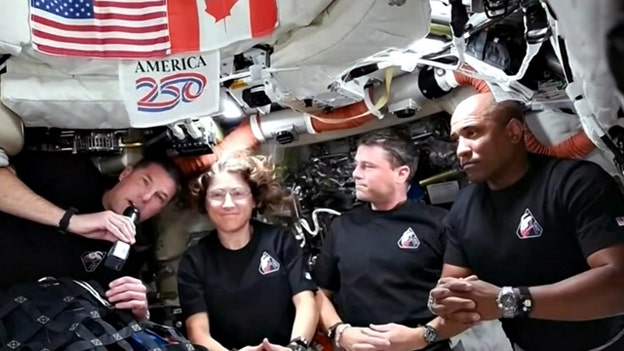
Trump speaks with Artemis II crew as they continue spaceflight: ‘You’ve made history’
NASA
President Donald Trump spoke to the Artemis II crew on Monday as their spaceflight mission continues, telling them they made history.
“Today you’ve made history and made all of America really proud. Incredibly proud,” Trump told the crew.
The president praised the four astronauts — Reid Wiseman, Victor Glover, Christina Koch and Jeremy Hansen — as “brave” and “modern-day pioneers”.
“America will be second to none in space and everything else that we’re doing, and we will continue to lead the whole thing, into the stars,” Trump said.
Posted by Landon Mion
8 hours ago
Nutella capitalizes on greatest free advertising moment in history on NASA Moon mission
Nutella is capitalizing on what internet users are calling the greatest free advertising moment in history.
A tub of the beloved chocolate-hazelnut spread has achieved liftoff — not just into space, but straight into viral fame.
The scene unfolded aboard NASA’s Artemis II mission, where a tub of Nutella casually floated out of the spacecraft’s kitchen like it had a call time and a lighting crew. In zero gravity, the jar drifted, turned, and practically posed — label-forward, perfectly framed — delivering a product shot so pristine it looked storyboarded.
Within hours, the clip rocketed across social media, with users marveling at what many say no marketing team on Earth could ever replicate.
“The greatest free advert in history,” one user joked.
“Nutella may have just got the greatest ad… ALL FOR FREE!” another account quipped.
The clip caught the attention of Nutella’s marketing team. The brand shared video of the delicious advertising accident, writing: “Honored to have traveled further than any spread in history. Taking spreading smiles to new heights.” It included spaceship and heart emojis in the post that’s been viewed nearly 200,000 times as of Monday evening.
This is an excerpt of an article by Fox News’ Lorraine Taylor.
Posted by Landon Mion
8 hours ago
Artemis II crew concludes solar eclipse with sunrise-like observation
The solar eclipse has officially ended, with the Artemis II crew witnessing a sunrise as the stunning event drew to a close.
NASA noted that the eclipse, which lasted about an hour, was visible only from the Orion spacecraft, thanks to its unique vantage point in deep space, and that no one on Earth could see it.
During the transition event, the astronauts were expected to search for an “earthshine” effect, where sunlight reflected off Earth casts a faint glow across the Moon’s near side, as well as take photos of nearby planets.
Posted by Bonny Chu
8 hours ago
Artemis crew wraps lunar flyby as teams prepare to send back images, data
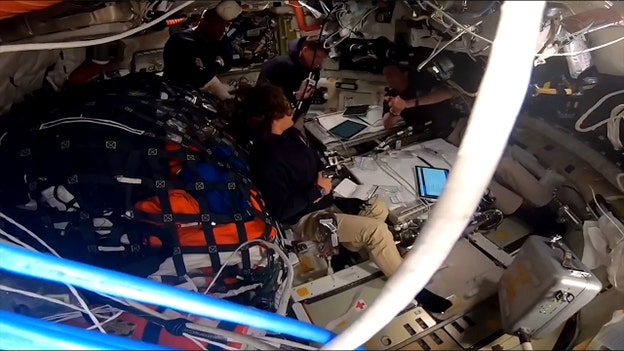
Artemis II astronauts conduct mission tasks during their flyby of the moon’s far side. (NASA)
The lunar observation phase of the seven-hour flyby has concluded.
Following the flyby, the flight control team will work quickly overnight to transmit as many captured images as possible back to Earth.
The data and descriptions received will be used to prepare for a crew conference the following morning, allowing lunar scientists and astronauts to continue their analysis and discussions.
Any high-resolution photos or data that could not be transferred during the flight due to bandwidth limits will be retrieved after the mission.
Posted by Bonny Chu
9 hours ago
Artemis astronauts observe breathtaking eclipse from Orion in unprecedented moment
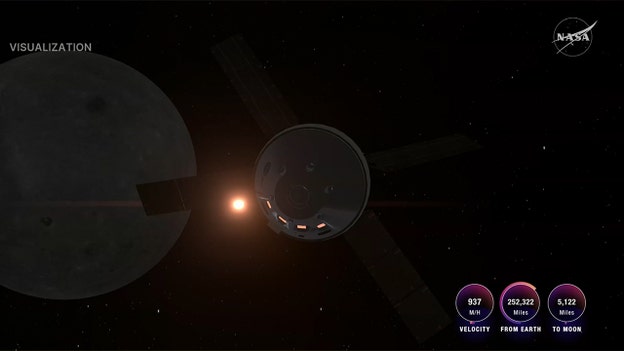
The Orion spacecraft emerges from the moon’s far side, preparing to witness a solar eclipse from deep space. (NASA)
A solar eclipse has begun for the Artemis II astronauts, who are observing the stunning event directly from the Orion spacecraft.
The breathtaking moment, unfolding around 8:35 p.m. ET, marks the first time humans have witnessed a solar eclipse from near the Moon.
As the Moon moves across the Sun, the crew is expected to witness a rare lunar sunset while also capturing the solar corona — the Sun’s outer atmosphere, visible only during totality.
During this time, the astronauts are also tasked to photograph several planets that come into view, including Earth, Mercury, Venus, Mars and Saturn.
Specially designated cameras are being used to capture the eclipse, along with additional scientific targets during the flyby.
The timing of the eclipse also carries added significance for the crew, coming just two days shy of the two-year anniversary of the 2024 North American solar eclipse.
Posted by Bonny Chu
11 hours ago
Artemis crew regains contact after tense 40-minute blackout behind Moon’s far side
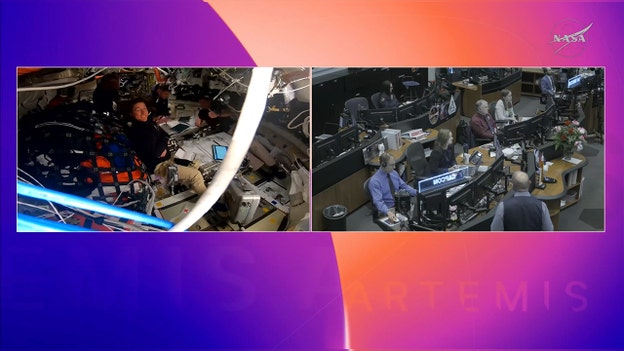
Mission control and the Artemis II astronauts are seen communicating during a live transmission. (NASA)
Mission control has officially regained communication with the Artemis II crew following the expected 40-minute blackout.
Contact was restored around 7:25 p.m. ET, after the Orion spacecraft passed behind the Moon’s far side and temporarily lost line of sight with Earth.
During this unprecedented period, the crew became the most isolated humans in deep space history — all while witnessing never-before-seen views of the Moon’s far side.
The four astronauts also set a new record for the farthest distance from Earth ever reached by humans, surpassing the Apollo 13 milestone by roughly 4,105 miles.
Posted by Bonny Chu
11 hours ago
Artemis II crew makes closest approach to Moon during blackout in key milestone
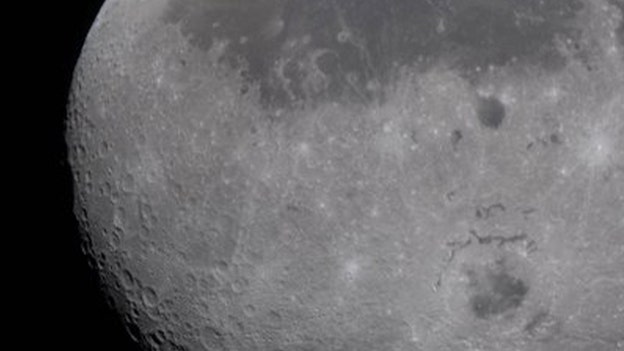
Artemis II crew continue to approach the near side of the Moon on April 6, 2026. (NASA)
The Artemis II astronauts have made their closest approach to the Moon during the mission’s historic flyby.
The milestone moment occurred at 7:02 p.m. ET during a planned 40-minute communications blackout, which began around 6:44 p.m. as the Orion spacecraft passed behind the Moon.
At their nearest point, the crew was approximately 4,057 miles from the lunar surface — close enough that the Moon will appear about the size of a basketball held at arm’s length, according to NASA.
The spacecraft is also expected to reach its farthest point from Earth, a distance of 252,760 miles, at roughly 7:07 p.m. ET, marking another key milestone in the Artemis II mission.
During this time, the astronauts continue conducting lunar observations and scientific measurements, even without live contact with mission control.
The blackout is expected to end around 7:25 p.m. ET.
Posted by Bonny Chu
11 hours ago
Crew enters communications blackout as Orion slips behind the Moon
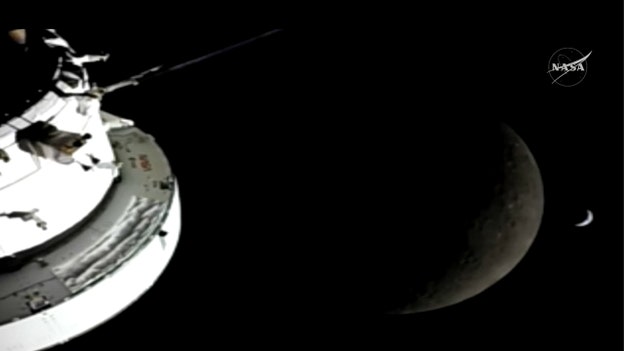
The Orion spacecraft, the Moon and Earth are seen in a frame captured from NASA’s live feed.
Mission control has officially lost contact with the Artemis II crew during an expected communications blackout triggered by the Orion spacecraft passing behind the Moon.
The temporary signal loss, expected to last roughly 40 minutes, begins once Earth disappears from the crew’s line of sight and will end when the planet reemerges on the other side of the Moon in a moment known as “Earthrise.”
While ground control and the science evaluation room will not be able to interact with the astronauts during this specific period, the crew will continue to execute their lunar targeting plan and conduct science observations throughout the blackout.
Posted by Bonny Chu
13 hours ago
Artemis II crew zeroes in on massive lunar basin dubbed ‘Grand Canyon of the Moon’
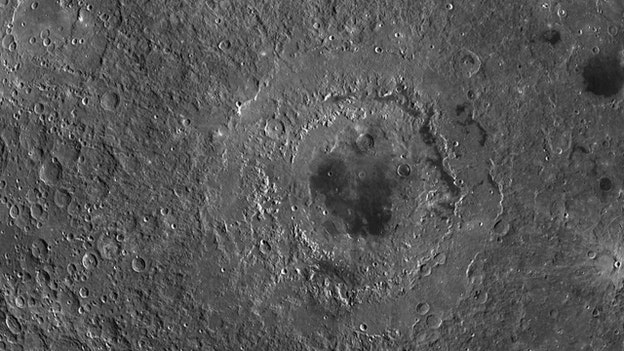
The Orientale is the youngest of the Moon’s large lunar basins. (NASA/GSFC/Arizona State University)
NASA said Monday that the Artemis II crew is looking forward to observing the Orientale Basin, calling it the “Grand Canyon of the Moon,” as they continue their lunar targeting plan during the seven-hour flyby.
“This has been a very exciting opportunity for the crew. They have all been very excited to see Orientale, as well as the science team has been looking forward to it,” NASA said during the mission’s live broadcast.
“It is known as the Grand Canyon of the Moon.”
The basin earned its nickname due to its multi-ringed geological structure, featuring deep valleys and ridges.
Despite its name — meaning “eastern basin” — Orientale is actually located on the Moon’s western side. The name comes from early lunar mapping, which labeled features based on the perspective from Earth rather than true lunar directions.
Considered the youngest of the Moon’s large basins, the Orientale Basin has three concentric rings, with the largest estimated to span roughly three times the width of Massachusetts.
Posted by Bonny Chu
15 hours ago
Artemis II crew splits into pairs for high-stakes lunar targeting plan
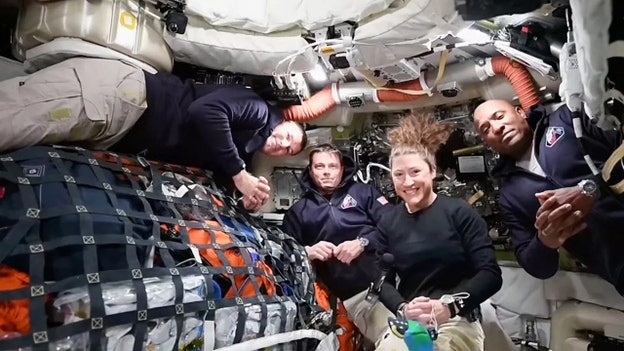
The Artemis II crew, from left, Canadien astronaut and mission specialist Jeremy Hansen, Commander Reid Wiseman, mission specialist Christina Koch and pilot Victor Glover as they appear on a video conference. (NASA via AP)
The Artemis II crew has begun their intensive lunar targeting plan during their seven-hour flyby of the Moon.
For the first five hours, astronauts will split into pairs and rotate observation duties, allowing each team a brief mental break roughly every hour.
Within the observing team, astronauts will alternate roles, with one using a zoom-lens camera to track targeting points, while the other provides descriptions with the naked eye.
Meanwhile, astronauts not on observation duty will relay status updates and scientific insights back to Earth in an active, real-time dialogue with lunar scientists.
During the flyby, the crew is expected to track historic Apollo sites, scout future landing zones and photograph rare views of nearby planets, including Mercury, Venus, Mars and Saturn, while also observing a solar eclipse from Orion’s unique vantage point.
Posted by Bonny Chu
BREAKING NEWS16 hours ago
Artemis II astronauts break Apollo 13 record, become first humans to travel farthest from Earth
The astronauts on the Artemis II mission to the moon have become the first humans to travel the farthest from Earth, breaking a record set by Apollo 13 astronauts in 1970.
The milestone happened at 1:57 p.m. ET.
The Apollo 13 crew traveled 248,655 miles away from Earth.
Artemis II will continue to travel away from Earth, with NASA expecting the Orion spacecraft to reach a maximum distance of 252,760 miles from Earth, surpassing Apollo 13’s distance by about 4,105 miles.
The crew will continue their mission to the moon to conduct scientific observations from the Orion spacecraft as they fly around the far side of the moon.
Posted by Stephen Sorace
16 hours ago
Artemis II closing in on distance record set by Apollo 13
Artemis II astronauts will shortly make their closest approach to the moon, breaking a record for distance traveled from Earth set by Apollo 13 in 1970, NASA announced.
NASA began streaming footage of the four astronauts inside the cabin of the Orion spacecraft preparing for the mission ahead.
Artemis II is expected to break the distance record at 1:55 p.m. ET.
The Orion spacecraft is expected to reach a maximum distance of 252,760 miles from Earth, according to NASA, surpassing the Apollo 13 record by about 4,105 miles.
NASA will stream the record-breaking moment. The astronauts are then expected to make remarks on the milestone around 2:10 p.m. ET., NASA said.
Posted by Stephen Sorace
18 hours ago
NASA shares new photo showing glimpse of moon’s far side: Crew is ‘first to see … with human eyes’
Artemis II has captured a new photo showing a glimpse of the moon’s far side as the astronautsnear their mission to loop around the celestial body.
The astronauts became the first to see the moon’s far side with human eyes, according to NASA.
“A new photo captures the Moon’s near side on the right (the side we see from Earth, identifiable by its dark splotches) and its far side on the left,” the space agency wrote in a post on X. “The Artemis II crew are the first to see the far side with human eyes.”
The crew will make its closest approach to the moon later Monday and pass around its far side before hanging a U-turn and heading back toward Earth.
Posted by Stephen Sorace
19 hours ago
Artemis II astronauts wake up ahead of historic moon mission, NASA shares morning routines
The Artemis II astronauts have woken up to begin the sixth day of their mission to the moon, NASA announced.
The space agency shared in a post on X that the crew is now “preparing for today’s lunar flyby, when they will see the Moon’s far side.”
“Morning routine: Wake up, shave, make the bed, witness something that’s never before been seen by human eyes,” NASA wrote.
The post included an image of the astronauts’ beds and sleeping quarters aboard the Orion spacecraft, along with another image of Mission Specialist Jeremy Hansen, a Canadian Space Agency astronaut, shaving his face in space.
Posted by Stephen Sorace
19 hours ago
Timeline of Artemis II lunar mission: When will the crew reach the moon?
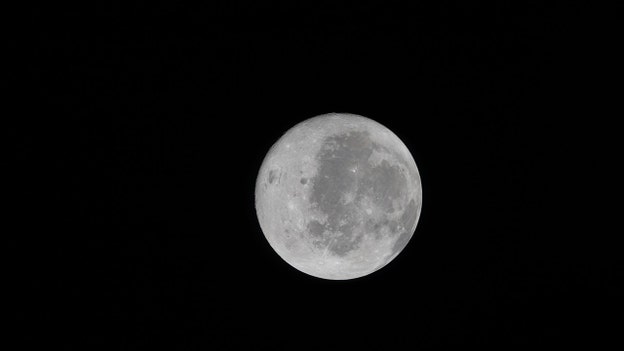
In this image taken on April 5, 2026, and shared by NASA, the Artemis II crew views the nearside of the moon. Visible on the moon’s surface are the Orientale basin, dark spots of ancient lava flows and the Tycho crater. (NASA)
The Artemis II astronauts are expected to reach the moon later Monday and complete a lunar loop around the far side of Earth’s satellite.
Ahead of the historic feat, NASA has shared a timeline of what to expect during the crew’s sixth day of spaceflight, though noted that the exact timings are subject to change.
1:56 p.m. ET
The Artemis II crew is expected to break the distance record previously set by the Apollo 13 crew in 1970 for the farthest distance humans have ever traveled from Earth. The Orion spacecraft is expected to reach a maximum distance of 252,760 miles from Earth, according to NASA, surpassing the Apollo 13 record by about 4,105 miles.
NASA said the Artemis II crew is expected to make remarks on the milestone around 2:10 p.m. ET.
2:45 p.m. ET
The crew will divide into pairs and begin seven hours of scientific observation of both the near and far sides of the moon.
6:44 p.m. ET
Mission Control expects a temporary communication blackout with the Artemis II crew as the Orion spacecraft passes behind the moon. The blackout is expected to last about 40 minutes.
7:02 p.m. ET
The astronauts will make their closest approach to the moon, viewing the surface from 4,070 miles away, and look like the size of a basketball held at arm’s length, according to NASA. The crew is expected to reach its farthest point from Earth at 7:07 p.m. ET.
7:25 p.m. ET
Communications between NASA’s Mission Control Center and the astronauts should be reestablished.
9:20 p.m. ET
The lunar flyby period ends and the crew will begin transferring some of the imagery back to teams on Earth.
Posted by Stephen Sorace
20 hours ago
Barbecue Brisket and smoothies: What’s for dinner at the moon?
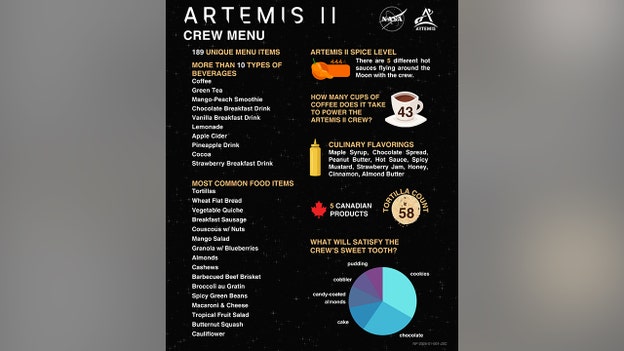
In this image shared by NASA, the space agency shows what kind of food, beverages and snacks are on the Artemis II crew’s menu during their mission to the moon. (NASA)
As the Artemis II crew begins their sixth day of space flight, a galactic menu of food has been fueling the astronauts ahead of their expected loop around the moon Monday.
The crew has access to 189 unique menu items during their space mission to the moon, according to NASA.
“With no resupply, refrigeration, or late-load capability, all meals must be carefully selected to remain safe, shelf-stable, and easy to prepare and consume in NASA’s Orion spacecraft,” NASA said.
Among the 10 beverages options are coffee and smoothies, while food items include tortillas, nuts, barbeque beef brisket, cauliflower, macaroni and cheese and butternut squash, the space agency said.
There are also five different hot sauces making the flight around the moon with the crew.
How will the astronauts satisfy their sweet tooth over the course of the 10-day mission? Cookies and chocolate, according to NASA.
The crew’s menu was specially designed with input from space food experts to support the astronauts’ health and performance during the lunar flyby mission, balancing calorie needs, hydration and nutrient intake.
The selections were also made with individual crew preferences in mind, according to NASA.
Posted by Stephen Sorace
21 hours ago
Apollo 16 astronaut shares encouraging message with Artemis II crew: ‘Cheering you on’
A former Apollo 16 astronaut recorded a message for the Artemis II astronauts as the crew closes in on their lunar destination, according to NASA.
Charlie Duke, a 90-year-old former astronaut, shared an encouraging message to the crew, who are set to become the first humans to travel the farthest distance from Earth.
“On the Moon is a photo of my family,” Duke said in the message. “I pray it reminds you that we and America and all of the world are cheering you on.”
The message continued: “Thanks to you and the whole team on the ground for building on our Apollo legacy with Artemis. Godspeed and safe travels home.”
NASA said it was “fitting that they hear his words” ahead of reaching the moon.
Duke, a former U.S. Air Force officer and test pilot, piloted Apollo 16’s Lunar Module in 1972. He became the 10th and youngest person to walk on the Moon.
Artemis II Commander Reid Wiseman, Mission Specialist Christina Koch and Pilot Victor Glover and Mission Specialist Jeremy Hansen will take scientific observations of the moon during their lunar flyby before embarking on a four-day flight back to Earth.
Posted by Stephen Sorace
22 hours ago
Former NASA administrator highlights what Artemis II astronauts are looking for as they pass moon
A former NASA administrator on Monday weighed in on what the Artemis II astronauts may see as they make the closest approach to the moon than any human since 1972.
Jim Bridenstine told “FOX & Friends First” that the four-person crew will look to identify future moon landing sites and look for water ice at the south pole of the moon.
“The south pole of the moon is where we believe there is hundreds of millions of tons of water ice,” Bridenstine said. “Water ice is H2O, so it’s water to drink, it’s oxygen to breathe, it’s hydrogen, which is rocket fuel and energy.”
“There’s just lots of opportunity to gather observations,” he added.
Bridenstine also highlighted the mission’s importance for future human space exploration and establishing a lunar base.
Posted by Stephen Sorace
23 hours ago
Artemis II crew reaches new mission milestone as history-making moon flyby nears
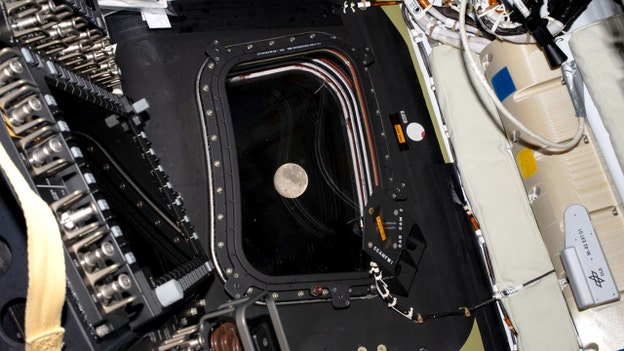
This image provided by NASA on Monday, April 6, 2026, shows a view of the moon taken by the Artemis II crew before going to sleep on flight day 5. (NASA)
The Artemis II astronauts aboard the Orion spacecraft reached a new mission milestone as the crew prepares to slingshot around the far side of the moon later Monday, breaking the record for how far humans have traveled from Earth.
At 12:37 a.m. Monday, Mission Control Houston confirmed the spacecraft officially entered the lunar sphere of influence at the tail end of the fifth day of space travel. It marks a major mission milestone that means the gravitational forces of the moon were now greater on the spacecraft than the pull of the Earth’s gravity.
“We are now falling to the Moon rather than rising away from Earth,” Artemis II Mission Specialist Christina Koch said from aboard the spacecraftabout an hour after entering the lunar sphere of influence. “It is an amazing milestone!”
Artemis II will make its closest approach to the moon later Monday during flight day six.
NASA said it will broadcast coverage of the mission beginning at 1 p.m. ET.
Posted by Stephen Sorace













 Parazonn