
Last UpdateApril 27, 2026, 11:23 AM EDT
Iran has offered to reopen the Strait of Hormuz in exchange for the U.S. ending its blockade on Iranian ports Monday. It is the latest offer since President Donald Trump cancelled in-person talks in Pakistan.
Covered by: Anders Hagstrom
WHAT TO KNOW
- Iran has offered a fresh deal to reopen the Strait of Hormuz in exchange for an end to the U.S blockade on Iranian ports.
- Tehran’s deal makes no concessions on the nation’s nuclear program, a key point for President Donald Trump.
- Hezbollah leader Naim Qassem also officially condemned negotiations between Israel and Lebanon on Monday.
- Pakistani Prime Minister Shehbaz Sharif held a 50-minute phone call with Iranian President Masoud Pezeshkian warning him about Tehran’s violations of the ceasefire with the U.S.
8PostsNewestOldest
2 hours ago
PINNED
Rubio identifies main roadblock to US-Iran agreement
Secretary of State Marco Rubio revealed what he believes to be that largest impediment to coming to an agreement with Iran in an interview with Fox News’ Trey Yingst on Monday.
Rubio referenced Iran’s “fractured” leadership and said Iranian negotiators often are in disagreement with other factions within the Iranian regime, severely limiting the scope of peace talks.
“Other than the fact that the country is run by radical Shia clerics, that’s a pretty big impediment. The other is that they’re deeply fractured internally, and I think that’s always been the case, but I think it’s far more pronounced now. The best way to understand Iran is you have a political class now. I think, look, people talk about moderates and hardliners. They’re all hardliners in Iran. But there are hardliners who understand they have to run a country and an economy, and there are hardliners that are completely motivated by theology,” Rubio said.
“The hardliners that are motivated by theology are not just the IRGC officials, but obviously the supreme leader and the council that surrounds him. And then you’ve got the political class, the foreign minister, the president, the speaker of the moguls. These guys, they’re hardliners, too, but they also understand the country has to have an economy. People have to eat, they have to figure out a way to pay salaries and their government. And so you see a tension, and you always have in that system between the Iranians who understand, let’s be hardliners. But let’s also balance that with the need to run a country and the hardliners who don’t care and have this apocalyptic vision of the future,” he continued.
Unfortunately, the hardliners with an apocalyptic vision of the future have the ultimate power in that country,” he added. “So as much as anything else, one of the impediments here is that our negotiators aren’t just negotiating with Iranians. Those Iranians then have to negotiate with other Iranians in order to figure out what they can agree to, what they can offer, what they’re willing to do, even who they’re willing to meet with.”
Posted by Anders Hagstrom
3 hours ago
Rubio says Iran ‘serious’ about making a deal after economy has been ‘flattened’
Secretary of State Marco Rubio says he believes Iranian negotiators are “serious” about coming to a deal with the U.S.
Rubio made the statement during an interview with Fox News’ Trey Yingst on Monday, saying the regime’s leadership is in tatters and looking to “buy themselves more time.”
“I think they are serious about getting themselves out of the mess that they’re in, there are all the problems Iran had. They had riots a few months ago, and these were economic riots, all the riots and all the, I’m sorry, all the problems that Iran had before the start of this conflict are still in place and most of them are worse. Price inflation is worse. They still have a drought going on. They still have trouble making payroll. Their economies flattened, they face crippling economic sanctions around the world. All those problems are there and many of them are worse. And now they have half the missiles, none of the factories, and no navy and no air force. All of that’s been destroyed. So they’re worse off and weaker,” Rubio said.
“If there is no deal, what comes next” Yingst asked.
“Well, again, that’s the president’s decision to make. I would start out by reminding everybody that the level of sanctions on Iran are extraordinary. The pressure on Iran is extraordinary, and I think more can be brought to bear,” Rubio responded.
“But I hope that in the aftermath of this conflict, the whole world’s eyes have been opened to the threat Iran poses. Again. They want to do with the world, with a nuclear weapon. What they are doing now with oil, they want to hold the world hostage so they can do whatever they want. That’s unacceptable,” he added.
Posted by Anders Hagstrom
3 hours ago
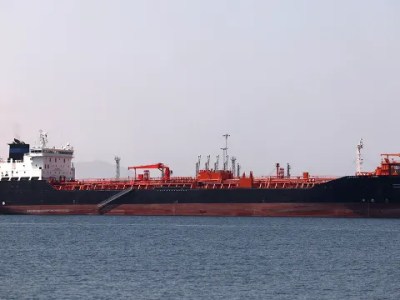
US turns to drones after retiring minesweepers to reopen Strait of Hormuz amid Iran crisis
The U.S. is racing to reopen the Strait of Hormuzas Iran threatens one of the world’s most critical shipping lanes, testing a Navy that has recently retired most of its dedicated minesweepers and is now relying on a smaller fleet of unmanned systems to do the job.
President Donald Trump has warned Tehran against further escalation and signaled the U.S. is prepared to act to keep the strait open, while Iranian forces have laid mines and threatened commercial traffic in the narrow waterway that carries a significant share of global oil.
The confrontation is now testing a weakness in the Navy’s mine-warfare posture. As the U.S. moves to reopen the Strait of Hormuz after Iranian mining threats, it is doing so after retiring most of the ships once dedicated to that mission and while still relying on a limited mix of legacy vessels and newer unmanned systems to clear one of the world’s most critical shipping lanes.
At the current moment, any mine-clearing effort is unfolding amid an active standoff in the strait. The U.S. has imposed a naval blockade on Iranian ports, while Iran has responded with attacks on commercial vessels, seizures of ships and threats to close the waterway entirely.
At least several commercial ships have come under fire in recent days, and both sides have intercepted vessels as they attempt to move through the choke point, underscoring the risks facing any operation to restore traffic.
Iran has tied further negotiations to the lifting of the U.S. naval blockade, while Washington has insisted on security guarantees and reopening the strait, leaving little immediate path to a deal.
The operation comes after a major shift in how the Navy handles mine warfare. The service retired its four Bahrain-based minesweepers last year, ending a decades-long presence of dedicated mine-hunting ships in the Middle East.
At the start of the current crisis, the Navy’s remaining minesweepers were based in Japan, not the Persian Gulf, and newer littoral combat ships equipped for mine countermeasures were not all positioned in the region.
Multiple news outlets have reported Iran has laid at least a dozen mines in the strait, citing intelligence assessments, though some estimates put the number higher.
This is an excerpt from an article by Fox News’ Morgan Phillips.
Posted by Anders Hagstrom
5 hours ago
Hakeem Jeffries lashes out at Trump over gas prices, condemns ‘war of choice’ in Iran
House Minority Leader Hakeem Jeffries blasted President Donald Trump’s “war of choice” against Iran on Monday.
“The Strait of Hormuz is closed, gas prices are soaring and billions of taxpayer dollars have been wasted,” Jeffries wrote in a post on X.
“How is this reckless war of choice working out for the American people?” he added.
Posted by Anders Hagstrom
5 hours ago
Israel strikes Hezbollah targets after terrorist leader condemns Lebanon-Israel talks
The Israeli Defense Force says it launched strikes against Hezbollah targets on Monday after Hezbollah leader Naim Qassem condemned negotiations between Israel and Lebanon.
The IDF strikes targeted Lebanon’s Beqaa Valley as well as other areas in the nation’s southern region.
Qassem on Sunday called negotiations between Israel and Lebanon a “grave sin.”
“We categorically reject direct negotiations with Israel, and those in power should know that their actions will not benefit Lebanon or themselves,” Qassem said in a statement, according to the Times of Israel.
“These direct negotiations and their outcomes are as if they do not exist for us, and they do not concern us in the slightest,” he added, vowing to “continue our defensive resistance for Lebanon and its people.”
Posted by Anders Hagstrom
5 hours ago
Putin to meet with Iranian foreign minister as Tehran looks for backers amid US talks
Iranian Foreign Minister Abbas Araghchi is in St. Petersburg, Russia on Monday for a meeting with Russian President Vladimir Putin.
The meeting comes a day after President Donald Trump cancelled plans for a U.S. delegation to travel to Pakistan for peace talks.
Kremlin Spokesman Dmitry Peskov told Russian media that the “importance of this conversation is hard to overestimate in terms of how the situation around Iran and in the Middle East is developing.”
Earlier this month, Russia’s Foreign Minister Sergey Lavrov said that Iran has an “inalienable” right to enrich uranium for civilian purposes.
Posted by Anders Hagstrom
6 hours ago
Iran turmoil erupts: Ultra-hardliner who mocked Trump poised to take over nuclear talks
Further signs of turmoil are emerging in Iran’s U.S. negotiating team as hardliner Mohammad Bagher Ghalibaf looks set to be replaced by a veteran conservative known for rejecting nuclear concessions, according to reports.
Iran International reported April 24 that Saeed Jalili, 60 — who already leads what has been described as a “shadow government” — is expected to succeed Ghalibaf following his sudden departure amid internal disputes.
Jalili also heads Iran’s ultra-hardline faction known as the Stability Front (Paydari), which is known to be a “bastion of ultraconservatism in Iran,” according to reports.
Ali Safavi, an official with the Iranian opposition coalition, the National Council of Resistance of Iran (NCRI), told Fox News Digital that Jalili “has evolved from a nuclear negotiator to an influential actor within the regime.”
Ghalibaf was reportedly forced to step down after attempting to bring the nuclear issue into talks with Washington, a move that triggered backlash within Iran’s political establishment.
President Donald Trump had called off plans for U.S. envoys to travel to Pakistan for peace talks with Iran on April 25.
The rivalry between Jalili and Ghalibaf is said to span more than a decade and intensified during the 2024 elections, when Jalili refused to step aside, contributing to the victory of President Masoud Pezeshkian.
Safavi said, “The increased visibility of latent divisions stems from recurring nationwide uprisings, deep economic crises and the pressures of war, all of which have intensified internal feuding.
“Far from signaling transformation, these developments reflect accelerating erosion and mounting pressure, deepening fractures and leaving the regime ever weaker and more vulnerable,” he added.
This is an excerpt from an article by Fox News’ Emma Bussey.
Posted by Anders Hagstrom
7 hours ago
Iran submits deal to reopen Strait, pushes off nuclear talks
Tehran has offered a new deal to the U.S. in order to reopen the Strait of Hormuz and bring an end to the war in Iran.
The new deal, sent via Pakistani mediators, would postpone nuclear negotiations to a later stage, according to officials.
In the nearer term, the deal would see Iran reopen the Strait of Hormuz in exchange for the U.S. ending its blockade on Iranian ports.
The absence of any nuclear concession is a critical one, given President Donald Trump’s insistence that preventing Iran from obtaining a nuclear weapon is the single most important point for the U.S. in negotiations.
“We have all the cards. If they want to talk, they can come to us, or they can call us,” Trump told Fox News on Sunday.
Posted by Anders Hagstrom






 Parazonn