By Newsmax Wires | Tuesday, 16 June 2026 09:07 AM EDT
The Trump administration is considering backing the creation of a massive $300 billion reconstruction and investment fund for Iran if Tehran fulfills commitments under a newly signed memorandum of understanding and ultimately reaches a broader settlement on its nuclear program and regional conduct.
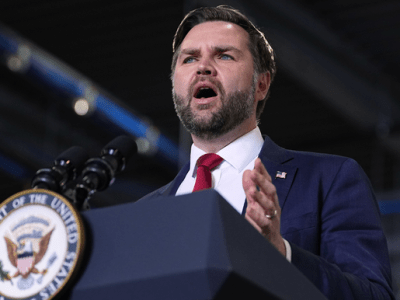
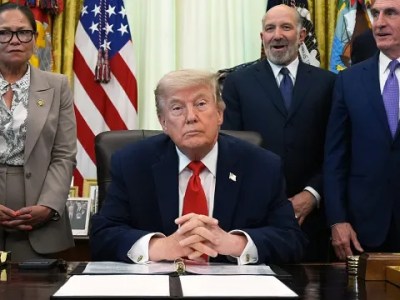
President Donald Trump has called reports that the U.S. will pay Iran $300 billion “fake news” — but Vice President JD Vance and others confirmed the establishment of a global fund paid by an international coalition to aid Tehran as real.
According to reports from the Financial Times and other outlets, the proposed fund would not be financed by American taxpayers.
Instead, administration officials envision a private-sector investment vehicle that would attract capital from U.S., European, Asian, and Gulf-based companies seeking access to Iran’s population of roughly 90 million people and its vast energy resources.
The proposal is tied to a 60-day implementation period following the memorandum of understanding.
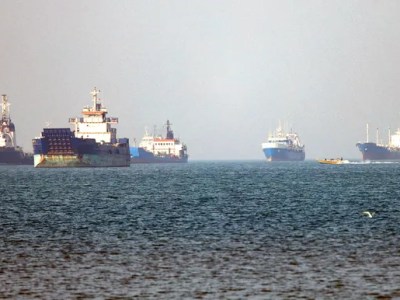
During that time, Iran would be expected to keep the Strait of Hormuz open, continue negotiations on its nuclear program, and demonstrate compliance with other commitments before gaining access to broader economic benefits.
Vance appeared to confirm the concept during a CBS interview, saying the reconstruction fund is “the sort of thing they could have access to” if Iran honors its obligations.
He later emphasized that Iran would “never get a dime of American taxpayer money,” though the U.S. would play a clear role in facilitating the massive fund.
The idea reportedly grew out of discussions in which U.S. negotiators argued that Iran could unlock enormous economic potential if it abandoned destabilizing regional policies and permanently curtailed its nuclear ambitions.
The Washington Post columnist David Ignatius reported that Trump special envoy for peace Jared Kushner told Iranian Parliamentary Speaker Mohammad Bagher Ghalibaf that if Tehran wanted a “Rolls-Royce price,” it needed to deliver a “Rolls-Royce product.”
Kushner reportedly argued that Iran’s oil and gas sector could rival Saudi Aramco under the right conditions.
Yet the proposal is already facing intense criticism from conservatives, foreign-policy hawks, and even some Trump allies who question whether the Islamic Republic can be trusted to honor any long-term agreement.
Critics point to statements by administration officials suggesting that sanctions relief and access to investment funds may be based on subjective judgments about whether Iran is “behaving appropriately,” rather than clear, measurable benchmarks.
One official reportedly acknowledged that sanctions relief would not be tied to specific conduct but instead to broader assessments of Iranian behavior.
Skeptics argue that such ambiguity could allow Tehran to receive significant economic benefits while continuing support for militant proxies across the Middle East.
They also note that Iran’s current leadership remains dominated by hardline clerics and security officials who have spent decades opposing the United States and its allies.
Ignatius himself urged caution, writing that Iran’s rulers are “the hardest of the hard-liners,” comparing their mindset more closely to North Korean leader Kim Jong Un than to Western-oriented business leaders.
He questioned whether leaders motivated by ideology and revolutionary goals could truly be transformed through economic incentives alone.
Among Republican critics, South Carolina Sen. Lindsey Graham has been particularly blunt.
Graham called the concept “tone deaf,” arguing that a $300 billion reconstruction package under the current Iranian regime “would be akin to a Marshall Plan for Germany with the Nazis still in charge.”
Additional concerns center on maritime security.
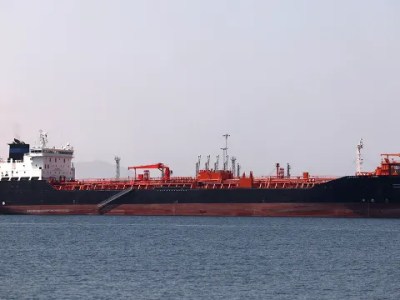
While Iran has reportedly agreed to reopen the Strait of Hormuz without imposing tolls, reports indicate Tehran and Oman are exploring “fees” for shipping-related services after the 60-day negotiation period.
Critics view such plans as a potential workaround that could allow Iran to profit from one of the world’s most strategically important waterways despite U.S. objections.
Trump has sought to distance himself from reports suggesting Washington would directly finance Iran’s reconstruction, calling claims that the United States is “paying” Iran “Fake News.”
Nevertheless, administration officials continue to discuss a framework that could ultimately unlock hundreds of billions of dollars in private investment if Tehran meets U.S. demands.
© 2026 Newsmax. All rights reserved.






 Parazonn