
By Newsmax Wires | Monday, 01 June 2026 07:14 PM EDT
Iran suspended negotiations with the Trump administration on Monday aimed at extending a ceasefire and reopening the Strait of Hormuz, citing intensified Israeli military operations in Lebanon and disputes over proposed deal terms.
An Iranian official familiar with the negotiations told The Washington Postthat Tehran halted discussions because of Israel’s escalating military campaign in Lebanon.
The official, who spoke on condition of anonymity because he was not authorized to discuss the talks publicly, also said last-minute changes to the proposed agreement by U.S. negotiators hindered progress.
Iranian and U.S. negotiators had indicated last week that they were making progress toward a memorandum of understanding that would extend the ceasefire and launch a new round of discussions over Tehran’s nuclear program.
President Donald Trump disputed reports that the talks had broken down, saying negotiations remained active.
“Talks are continuing, at a rapid pace, with the Islamic Republic of Iran,” Trump wrote in a post on Truth Social on Monday.
The breakdown comes amid renewed military exchanges in the Persian Gulf region and escalating violence in Lebanon, complicating Trump’s efforts to secure an agreement with Iran.
The U.S. military said it carried out strikes over the weekend against Iranian radar and drone facilities near the Strait of Hormuz after Iran shot down an American drone operating over international waters.
U.S. Central Command said the strikes targeted Iranian air defenses, a ground control station, and two attack drones near the coastal city of Goruk and on Qeshm Island. The military said the assets posed threats to commercial shipping in the region.
Iran’s Islamic Revolutionary Guard Corps responded Monday by launching missiles from Khuzestan province toward Kuwait, saying the attack was retaliation for what it described as a U.S. strike on a telecommunications tower on Sirik Island.
Kuwait’s military said its air defense systems intercepted missile and drone threats and reported no casualties or damage. Civil aviation operations were disrupted across parts of the Persian Gulf region.
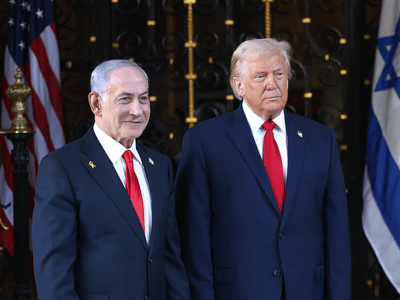
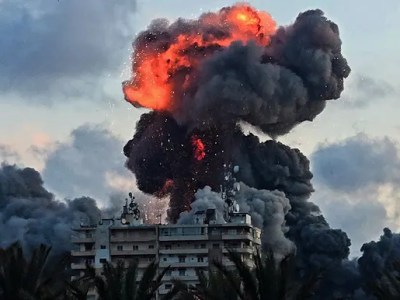
Hostilities also intensified in Lebanon after Israeli Prime Minister Benjamin Netanyahu announced new strikes against Hezbollah positions. Civilians fled southern areas of Beirut following the announcement.
Iran has maintained that military activity in Lebanon is covered by the ceasefire arrangement reached with Washington in April.
“The ceasefire between Iran and the U.S. is unequivocally a ceasefire on all fronts including in Lebanon,” Iranian Foreign Minister Abbas Araghchi wrote in a post on X. “Violation on one front is a violation of the ceasefire on all fronts.”
Iran’s state-affiliated Tasnim News Agency later reported that Tehran was suspending negotiations and warned that Iran and allied militant groups were prepared to fully close the Strait of Hormuz.
Tasnim said the Iranian negotiating team was halting “dialogues and exchange of texts through a mediator” because of continued Israeli military operations in Lebanon.
Despite the setback, officials from both countries have continued exchanging proposals through intermediaries as they seek to finalize a memorandum that would extend the ceasefire by 60 days.
Vice President JD Vance said last week that negotiators remained divided over several provisions and that it was unclear when or whether Trump would approve the agreement.
Among the principal issues are Iran’s stockpile of highly enriched uranium and the reopening of the Strait of Hormuz.
Treasury Secretary Scott Bessent has said any agreement would require Iran to surrender its nuclear fuel and commit not to pursue a nuclear weapon.
Skeptics, including some congressional Republicans, have questioned whether Tehran can be trusted to abandon its nuclear ambitions and have opposed the release of billions of dollars in frozen Iranian funds that Tehran has sought as part of a deal.
France requested an emergency meeting of the U.N. Security Council on Monday as violence continued to expand in Lebanon and the Persian Gulf region.









 Parazonn